Tuesday, March 8, 2022

Priorat: Wines of Power and Elegance!

Priorat DOQ is a tiny enclave/ appellation that stretches out from the foot of the Sierra of Montsant, in Catalonia, Spain. Though grapes were grown here since the middle ages, Priorat gained international fame, very recently, in 1989, when five producers decided to launch wines made from very old Garnacha (grenache) vines. The five pioneers were René Barbier from Clos Mogador, Carles Pastrana from Costers del Siurana, Joseph Lluis Perez from Mas Martinet, Daphne Glorian from Clos Erasmus and Alvaro Palacios, heir from the Rioja's family Palacios Remondo. The superb wines they made/make, put this appellation in the wine world map and helped Priorat to become a DOCa (Denominación de Origen Calificada) which is the highest quality level in Spain, similar to the Italian DOCG.
                                         
So what is so special about Priorat
The name of this boutique region comes from the word priory, because once upon a time there was a Carthusian monastery here, built by Alfonso II in 1163.  This monastery was known as Scala Dei (God’s stairway to heaven), and precisely it was the monks, as they did in many other parts of the world, who brought the grapes and the winemaking know-how. Nowadays, Scala Dei is the name of a winery owned by world known Cava producer Codorníu, that operates from some of the old monastery buildings.
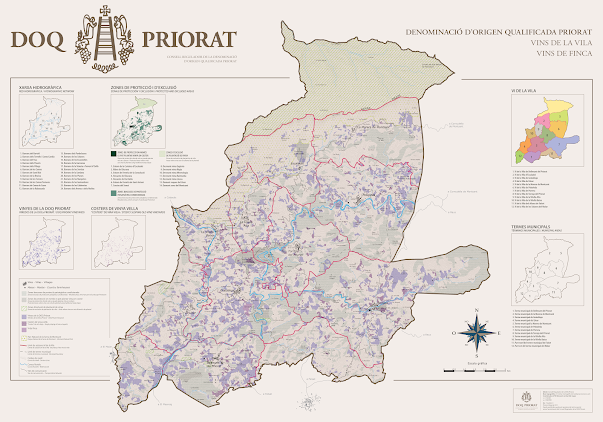
There are 12 distinctive wine villages or zones in Priorat and these are: Bellmunt del Priorat, Gratallops, el Lloar, la Morera de Montsant, Porrera, Poboleda, Scala Dei (monastery), Torroja del Priorat, la Vilella Alta, la Vilella Baixa, Masos de Falset and Solanes del Molar. (see below map courtesy of DOC Priorat)

Stylistically, Priorat wines are age worthy reds, and basically powerbombs! with big bodies and alcohol, plenty of tannins and structure, they feature ripe blackfruit notes, chocolate, wild herbs and mineral aromas. These wines are concentrated and extracted, this is the direct result of very low yielding vines, most of them providing only 5-6 hl/ha. These vines grow in a very special soil called Llicorella, which is a dry, poor, slate and quartz based soil. The climate in Priorat is one of extremes, hot during the day and cool at night, most of the vineyards are distributed around a series of valleys, with high elevations that go up to 900 meters/ 3,000 feet. If you visit Priorat, you will see the vineyards planted on terraces built a long time ago. I still remember when René Barbier drove me through the appellation and warned me before we were about to go down the hill. It felt pretty much like a roller coaster ride to me!

Priorat wines are blends, similar to the ones from the Southern Rhone. They are mostly Garnacha or Carignan based, with small percentages of Merlot, Cabernet Sauvignon, Syrah and native Tempranillo. The blend varies according to the winemaker’s taste, with some of them choosing not to include Carignan at all. Most of the winemakers prefer to age wines in French oak, following the Bordelais tradition, but some use American oak. Both Garnacha and Carignan love the heat so much, they can easily reach high alcohol levels on their own, yielding an average of 15% or more for most wines. But as my title suggests, Priorats are wines of  elegance, meaning you shouldn’t be discouraged by their alcohol, since it is usually very well integrated and balanced. The challenge of this region, if any, is to keep the freshness, so that the wines always remain lively and full of fruit.

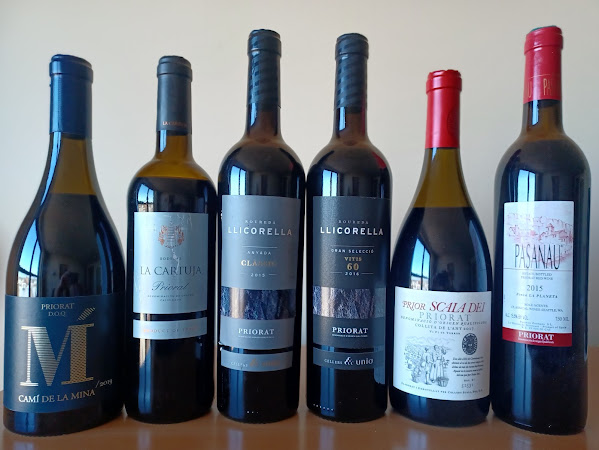
Higher end Priorat is usually pricey ($50 and up) but there are plenty of  producers that make affordable wines that are quite good too, like my recommendations below, that I hope you will enjoy soon!

Clos Pachem Cami de la Mina 2018, $19.99
Vinos Atlántico, La Cartuja 2018, $24.99
Cellers Unio Roureda Llicorella Classic 2015, $24.99
Cellers Unio Roureda Llicorella Vitis 60 2016, $31.99
Prior Scala Dei 2017, $29.99
Pasanau Finca La Planeta 2015, $54.99
 

If you have the $$$ to afford the high end top wines. Here are some of the best I ever tasted:
Alvaro Palacios Finca Dofí 2019, $104
Clos Mogador 2019 $109
Vall Llach 2019, $100

Cheers! Silvina

Remember to subscribe to keep receiving Thoughts of La Wina in your inbox and to follow me in Linkedin and Instagram @Silvinalawina.

#thoughtsoflawina #WineWednesday#spanishwines #prioratwines

Tuesday, February 22, 2022

Wow-me Wines!

Tasting wine is possibly my favorite thing in the whole wide world, I prefer this better than eating or anything else. Though these days, I do most of my tastings at home, slowly and surely, in person wine tastings are coming back, which is something I’m so looking forward to, just the smell of opened wine bottles has the magic of putting a smile on my face, thinking about what I’m going to taste/ discover next!
 
And of course, when tasting a new wine for the first time, I usually ask myself, will it wow me or not? and once this happens, I make sure to write all the information down, to take a picture of the bottle  with my phone, to put stars next to it and to find out its price, so that I can recommend it to all of you, my faithful readers.
 
So, what characteristics must a Wow-me wine have?
 
First, elegance or finesse, this usually comes hand in hand with noticeable acidity, but I’m not talking here about aggressive crispiness, but more about refreshing acidity, and vibrant tension, that adds life to any wine. I also like complexity in a wine, mostly when a wine has layers and layers of flavors, especially, after being decanted, and after they had a chance to open up, shooting even more aromas and flavors to you. For example, I like wines that offer herbal, spicy or mineral notes. I think these make any wine more interesting, and of course, let’s not forget the bouquet wines develop from reductive aging; those delicious notes of mushrooms/ truffles, forest floor, leather, ink, smokiness or musk have the wow effect on me, giving any wine the extra kick.  
 
Balance of the elements is another wow-me factor. I like it when there are subtleties in my wine, like the perfect marriage, where every part plays a role in the whole and everything sings in harmony. For example, if a wine has been aged in oak, I like, when it has a touch of oak and it is not so oaky that all you can taste is wood, like the kiss of oak in a good Burgundy Chardonnay. All wow-me wines must have their elements intertwined so that their fruit, acidity, tannins, alcohol and body complement each other and don’t overpower the others. 
 
Texture is another component of any wow-me wine, wow-me wines have a density you can feel all across your palate. Oftentimes, this is described as meatiness or savoriness, it’s a very similar experience to what I feel when eating authentic Argentinian beef (those that have been to my country know how tender and juicy our filet mignon is). In wines, we can feel the same sensation, a sensation of roundness, smoothness, and suave, velvety quality.
 
A long finish, most of my wow-me wines have long endings, it’s like they need to leave a trace in your palate of their impressive presence, even after you have swallowed them. A long finish is indeed special and usually connected to a wine’s essence.   
 
Ability to age, is true that I enjoy many wines that are recommended to be consumed when young, when all their fruit is fresh inside the bottle, but most often, wow-me wines have the capacity to age, to get better in the cellar,  to evolve in time.
 
Yet, above all, wow-me wines should give us pleasure, make us feel special and entice us to keep on drinking. I find that certain wine regions in the world have that magic of producing such wines, better than others, and at times it’s hard for me to find wines that I don’t like. Among these are Brunello and Barolo in Italy. I attended two pre-pandemic tastings and I remember how much I liked all of the wines there; though, I must have tasted more than 75 different brands in one seating, everything was sooo good, it was so hard to choose! And even harder to find something I didn’t like. This is related to craftsmanship and know-how of most producers who seriously invest in improving quality.
In the US, Napa Valley is such an appellation, the quality and standards of Napa wines is so unbelievable, that I can drink and drink and drink these wines and never get tired. Learn more about Napa and its terroir here.
 
My recommendations are an assorted selection of Cabernet Sauvignons sent to me from Napa Vintners. I invite you to give them a try, and to let me know what you think. I’m sure some of these selections will WOW you too!
 
*Silverado Vineyards Napa Valley Cabernet Sauvignon 2018, $50
Polished red showing layers of ripe raspberry and strawberry notes. Smooth and flavorful tannins fine tune the elegant finish.
 
*Buena Vista Winery Napa Valley Cabernet Sauvignon 2018, $65
Solid Cab offers a core of plum and crème de cassis fruit with espresso and mineral notes, finishing smooth and opulent.
 
*Pine Ridge Vineyards Stag Leaps Cabernet Sauvignon 2018, $140
Muscular red, a true Powerbomb, full of fruit, body and oak! featuring ripe red currant, cherry and anise notes. Combines power and finesse!
 
*Long Meadow Ranch Napa Valley Cabernet Sauvignon 2016,$55
Delicious red showing black cherry, licorice and cedar notes. Supple tannings provide structure and great length.
 
*Marston Family Vineyards Spring Mountain Cabernet Sauvignon 2015, $150
Full-bodied and beefy red featuring plum, blackberry marmalade and tobacco notes. Its majestic/ chewy tannins will soften with time. Outstanding bottle to cellar! WOW

 
Cheers! Silvina
#thoughtsoflawina #WOWmeWines #WineWednesday
 
Remember to subscribe to keep receiving Thoughts of La Wina in your inbox and to follow me on Linkedin and Instagram @Silvinalawina.

Tuesday, February 1, 2022

Prosecco Rosé for Valentine's Day

Valentine’s Day and bubbly wines always go hand in hand. Yet, I must admit I enjoy sparkling wines all year around and agree with what Coco Chanel used to say: “I drink Champagne on two occasions when I’m in love and when I’m not”. So, whether you are lucky enough to celebrate Valentine’s Day with your soulmate or with your friends, there’s no time like the present to open a bottle of elegant Prosecco Rosé.
 
Officially approved as such, only about two years ago, Prosecco Rosé offers the deliciousness of a crafted sparkling wine at a very affordable price. It is made mostly from Italian native Glera grapes with up to 15% Pinot Noir, which provides its beautiful pinkish color. 
Stylistically, Prosecco Rosé is made dry, either Brut Nature or Extra Dry. It features a medium body with balanced alcohol (11% is the minimum by law, but most samples will be around 12.5%), showcasing juicy peach, golden apple and pear notes with red fruits such as raspberry, wild strawberry and cherry; all of that framed by a refreshing, crispy finish. In general and compared to other sparkling wines, Proseccos both white and rosé are fruitier than say Cava, Cmant or Champagne
 
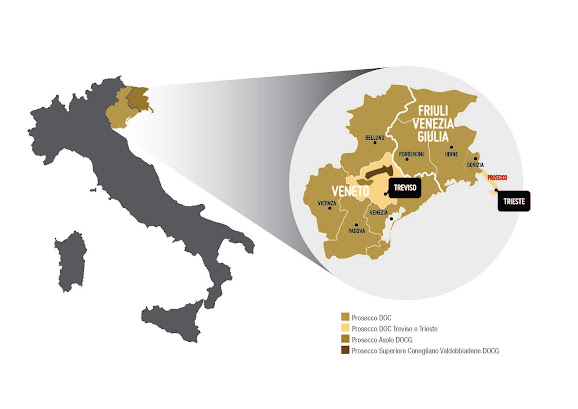
The Prosecco area of production is located to the north east of Italy, west and east of the city of Venice, covering nine different provinces (Belluno, Gorizia, Padua, Pordenone, Treviso, Trieste, Udine, Venice and Vicenza), which are spread in two very well known wine regions: Friuli-Venezia Giulia and the Veneto. See map below, courtesy of the Consorzio di Tutela della Denominazione di Origine Controllata Prosecco.
 

Most vineyards are planted on flat valleys but there are plenty of hill sites in the DOCGs, where the best Glera is grown.  The soils are mostly alluvial, rich in clay, silt and minerals. The climate is tempered by the Alps located to the north that act as a barrier but also influenced by the Adriatic sea and the Sirocco winds. Hilly vineyards benefit from altitude too. Most Prosecco
Rosé available in the US market, falls under the generic Prosecco DOC category. Yet, the best Prosecco wines come from the DOCGs within Treviso: Conegliano Valdobbiadene Prosecco Superiore, Conegliano Valdobbiadene Prosecco Superiore Rive and Asolo Prosecco Superiore. (You will see these appellations, more often on Prosecco white bottles).

Like with every sparkling wine, vinification plays a huge role here, specifically the method used to produce the bubbles that we enjoy so much. In the case of Prosecco Rosé, the second fermentation happens using the Charmat or Martinotti method, i.e inside a pressurized tank for a minimum by law of 60 days, but winemakers can keep them for longer. Like other sparklers, Prosecco Rosé will start its life as a still wine, to which more yeast and sugar are added to create the bubbles, once the second fermentation is over and the yeasts consumed all the sugar and died, the wines are briefly aged on their lees to add complexity, filtered and fined before being bottled.

According to Prosecco regulations, Prosecco Rosé is mostly a vintage wines (
Millesimato in Italian) with 85% of the blend sourced from grapes harvested during the year indicated on the label. The leftover 
15 % allows producers to include wines from other vintages too, emulating the practice of non-vintage Champagne.

A whooping 500 million bottles of Prosecco was produced in 2020 alone  (this number includes also Prosecco white), of these close to 17 million were bottles of Prosecco Rosé. That number was expected to reach up to 50 million in 2021. 78.5% of the total Prosecco production is exported, and the US is after Europe, their second most important market, a popularity that is expected to keep growing in the coming years.
  
Enjoy your Prosecco Rosé when young, within a year from the vintage, when its fruitiness is still intact. Most Prosecco Rosé is in the market sooner than other sparkling wines (Cava or Champagne, that are usually aged for longer). In the case of Prosecco Rosé, they can be released for consumption after January 1st of the year following the harvest.  
  
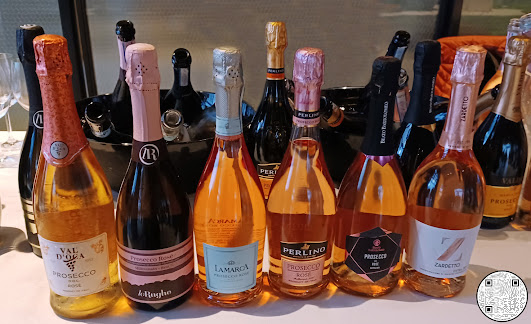
My recommendations, that I hope you will enjoy soon are:
* Val D'Oca Prosecco Rosé NV, $14.99
* La Rughe Prosecco Rosé 2020, $13.99
* La Marca Prosecco Rosé NV, $15.99 (widely available in the US)
* Perlino Prosecco Rosé 2020, $14.99
* Zardetto Prosecco Rosé 2020, $14.99 (widely available in the US)
* Beato Bartolomeo de Braganze Prosecco Rosé 2020, $13.99


Salute and Happy Valentine's Day! Silvina
#thoughtsoflawina #WineWednesday #proseccorose #proseccodoc #italiangenio #drinkprosecco #tasteprosecco.

Tuesday, January 18, 2022

Vintages and Why They Are Important

One of the things I like about wine is that you are never done, not only because there is so much wine out there to taste, and way too many options! but mostly because wine changes according to vintages, and with each new harvest, we get a new opportunity to taste and discover a new version of our favorites.

Let’s face it, the flavor of our wine depends very much on what happens in the vineyards that particular year. Did the vines get plenty of rain?, enough sun? Did grapes have a chance to ripen to perfection? Was it too dry or too humid? Was it so hot that wines lack the balance of previous years? All of these questions are vital to determine a vintage and wine critics and wineries take this very seriously. They even put a number on the vintage, like they do with wines, some will get an 88 (a so and so vintage) and others 99 (a great vintage).

When talking about vintages, we must distinguish between climate and weather. Climate is the weather patterns that repeat themselves year after year and that will allow us to classify a region into a specific climate zone. That knowledge will help us decide which varieties to plant and in which places. For example, we hear the climate of Burgundy is cool continental, ideal to grow Chardonnay and Pinot Noir, while in Provence, it is Mediterranean with warmer temperatures and very dry weather, ideal for Grenache. In California for example, they use the Winkler degrees system created by the University of Davis, which is based on average temperatures during the growing season. The different wine regions are divided in 5 zones or from I to V.  I is the coolest and V the hottest. To give you some context, Champagne, which is a cool region, is region IA, Burgundy IB, Piedmont  II, Rioja III, Languedoc V, etc.

Weather, or I should say vintage weather, is all of the specific conditions of one particular year. Which normally vary every year and they affect the final crop of that year. A cool growing season may produce more acidity and less alcohol, or too much heat during the growing season, the exact opposite. In other words vintages are defined by the weather phenomena in a specific growing season. 

Below, you will find some of the most remarkable vintages of the most important wine regions in the world. In general, expect to find better wine quality overall in these years and in some cases expect to pay a bit more for these wines too! (especially at premium level).

Bordeaux Left Bank:2016, 2015, 2010, 2009, 2005, 2000, 1990, 1989, 1982.
Bordeaux Right Bank:2016, 2015, 2010, 2009, 2005, 1998
Burgundy:2016, 2015,2012, 2010, 2009, 2005, 2002,1990
Northern Rhone:2017, 2016, 2015, 2012, 2010, 2006, 2005, 2001
Southern Rhone:2016, 2015, 2012, 2010, 2007, 2005, 2001
California:2014, 2013, 2012,2007,2005, 2004, 2002
Piedmont:2016, 2015, 2013, 2011,2010, 2009,2008, 2007
Champagne:2012, 2008, 2002
Port:2017, 2016, 2011

Now, if you want to learn more about vintages in other regions, Wine Spectator
® creates and publishes every year this wallet vintage chart.
Feel free to download it, print it and carry it with you. Many thanks to the magazine for allowing me to add their link in my post.

An excellent vintage is not only important to get information about the style of the wine, but it will play an important role when buying wine as an investment, since excellent vintage wines fetch higher prices. They will also have a better chance to yield higher earnings on your investment too!  On the other hand, a so and so vintage sometimes will drop the price of an expensive wine so much, allowing you to acquire it.
Yet, nothing is set in stone… since even in bad vintages, there are very talented winemakers that know what they are doing in the vineyards and still make wonderful wine in spite of all the adverse weather. 

In any case, knowing about vintages can only help you, allowing you to make better wine choices in your future. Cheers! Silvina

#Thoughtsoflawina #WineWednesday #Vintages #Wineandvintages


Tuesday, January 4, 2022

Reds to Beat the Winter Blues!

Happy New Year 2022!

Oh dreary winter, we all know very well what it means, colder, grayer and shorter days, thick sweaters, coats, scarves and gloves, but also rich stews and soups, hearty foods, a cozy fire, and one or two seasons of Netflix to binge over the weekend! What wine could we drink to warm our bodies and souls?  Here are 4 selections that ended up at my door. But before we dive into them, let me thank Palm Bay Imports, Ole Obrigado, Global Vineyards and Mascota Vineyards for these fine samples.

Rocca delle Macie Chianti Classico 2019, Italy
A blend of 95% Sangiovese with 5% Merlot, aged for 6-10 months in Slavonian/ French oak. Concentrated black cherry, blueberry and herbal notes explode on this light bodied red that has grip and chalky tannins. Very savory indeed! the ideal wine to have every night with pasta, pizza or hamburgers! $16.99

Raig de Raim Tinto 2018 Terra Alta, Spain
A blend of Garnacha and Samsó (Carignan), aged for 4 months in a combination of French and American oak. This medium bodied and chewy tinto features blackberry, plum and pencil shaving notes.  Its mouth filling texture adds complexity to the polished finish. Delicious with sausage with lentils or chickpea soup. $15.99

Marichal Tannat 2019, Canelones, Uruguay

100% Tannat, unoaked.
Full bodied red showing outstanding espresso notes, complemented by ripe blackberry and prune aromas. Super round and velvety structure.  I was pleasantly surprised that this was not austere and super tannic like other tannats that require time to soften up. Very succulent! Have it with lamb chops or t-bone steaks.  $15.99

Unánime Gran Tinto Malbec 2018, Mendoza, Argentina
A blend of 60% Cabernet Sauvignon, 25% Malbec and 15% Cabernet Franc. Aged for 20 months in French oak. A full bodied red that yields raspberry, cassis and chocolate notes. Muscular and filling, it coats your palate and invites you to reach for your glass over and over again! Have it by the fire with a loved one and some dark chocolate with hazelnuts, it will definitely help you set the mood!  $24.99


So, what do you plan to drink to cheer you up this winter? Share your thoughts with me via instagram. Cheers! Silvina.

#Thoughtsoflawina #winterwines #winestobeatthewinterblues

Remember to subscribe to keep receiving Thoughts of La Wina in your inbox and to follow me on Instagram @Silvinalawina and Linkedin.